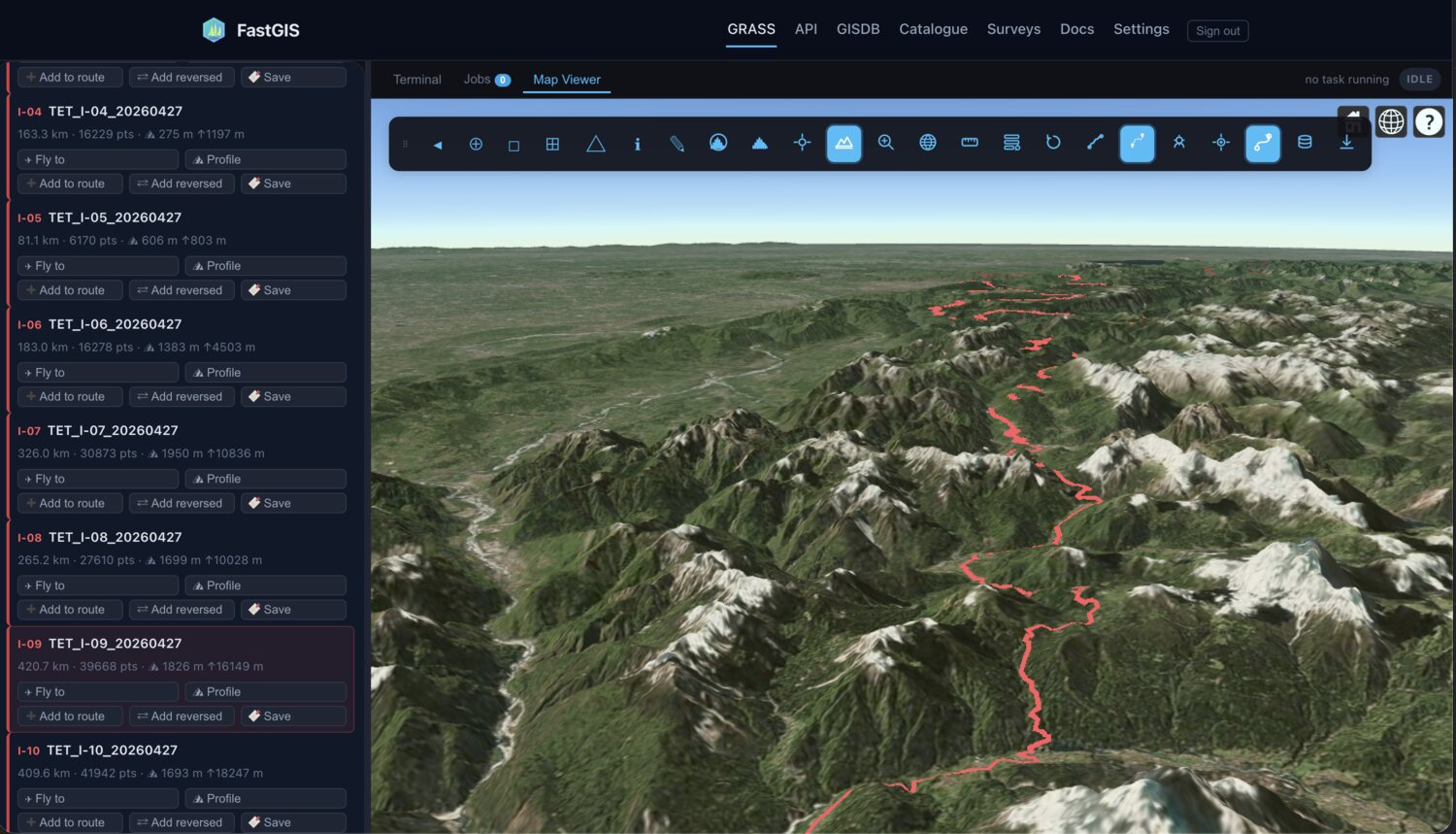
3D · TET
Trails in 3D
Browse & edit TET tracklines over self-hosted GLO-30 terrain.
One app for the whole ride — engine optional. Adventure-moto navigation built on a curvature engine that knows the good roads, and 1.27 million mountain-bike trails that time themselves. Real terrain, real offline, your data.
The same maps, the same offline engine, the same terrain — two very different rides. Tell us which one is yours and we'll take you down that line first.
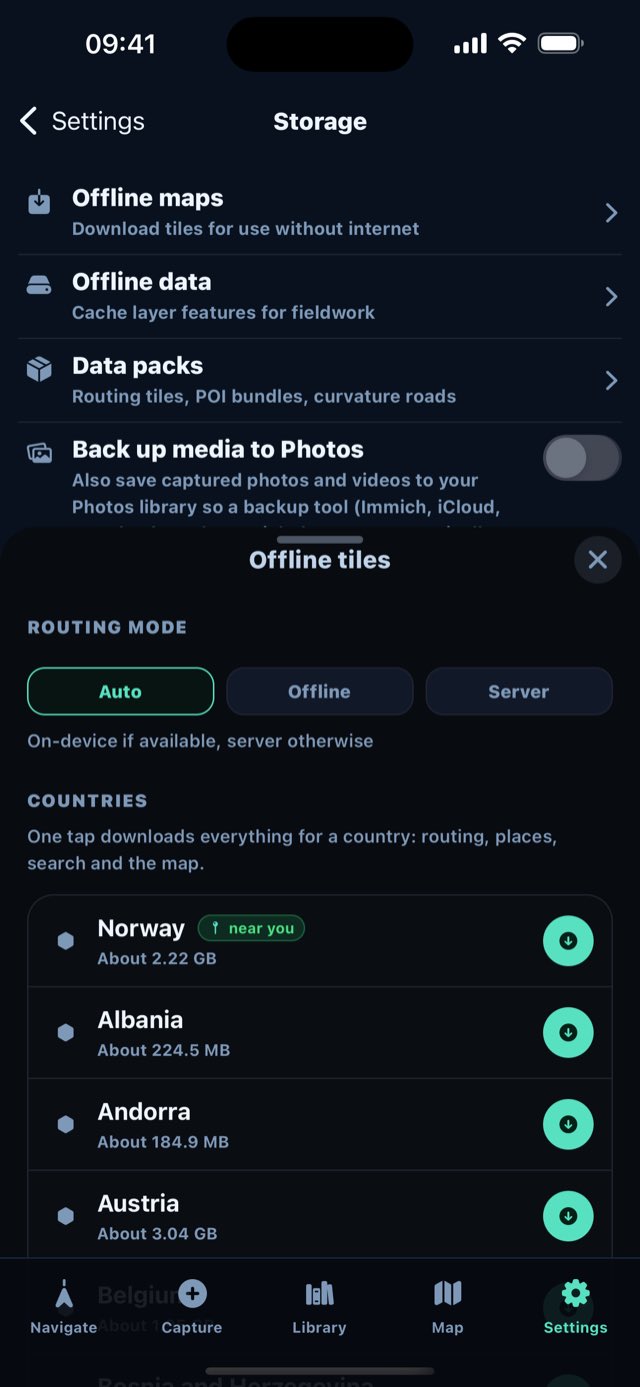
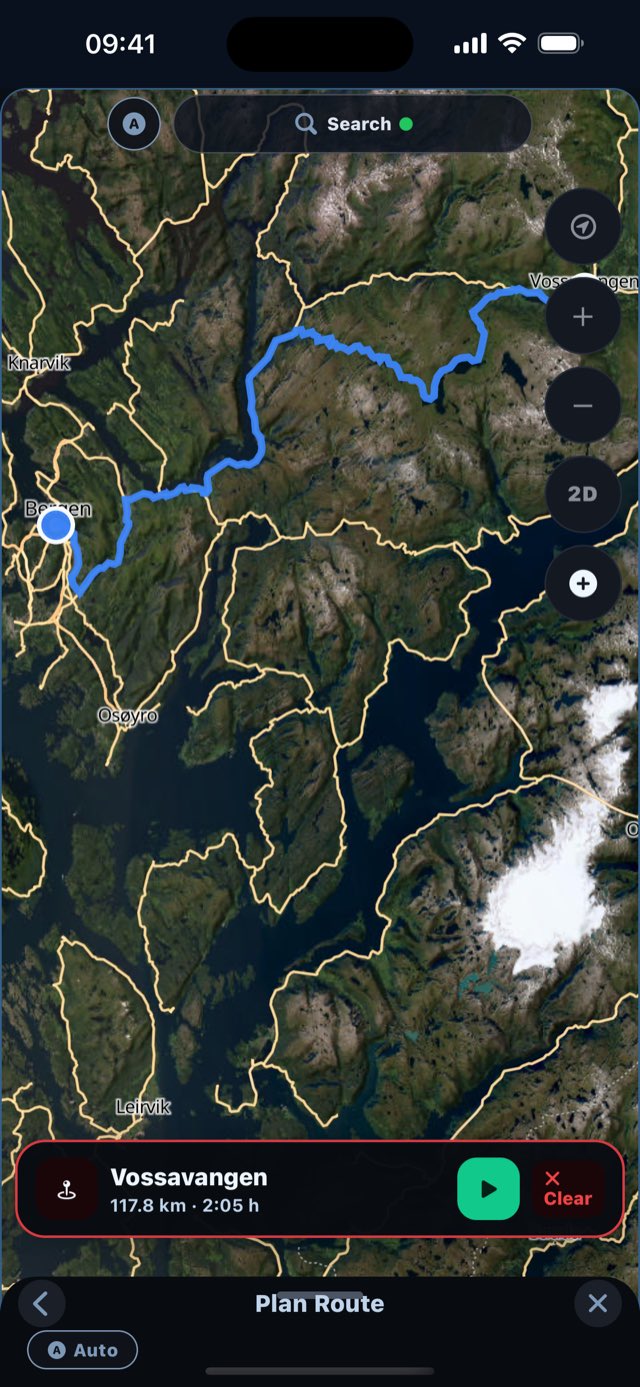
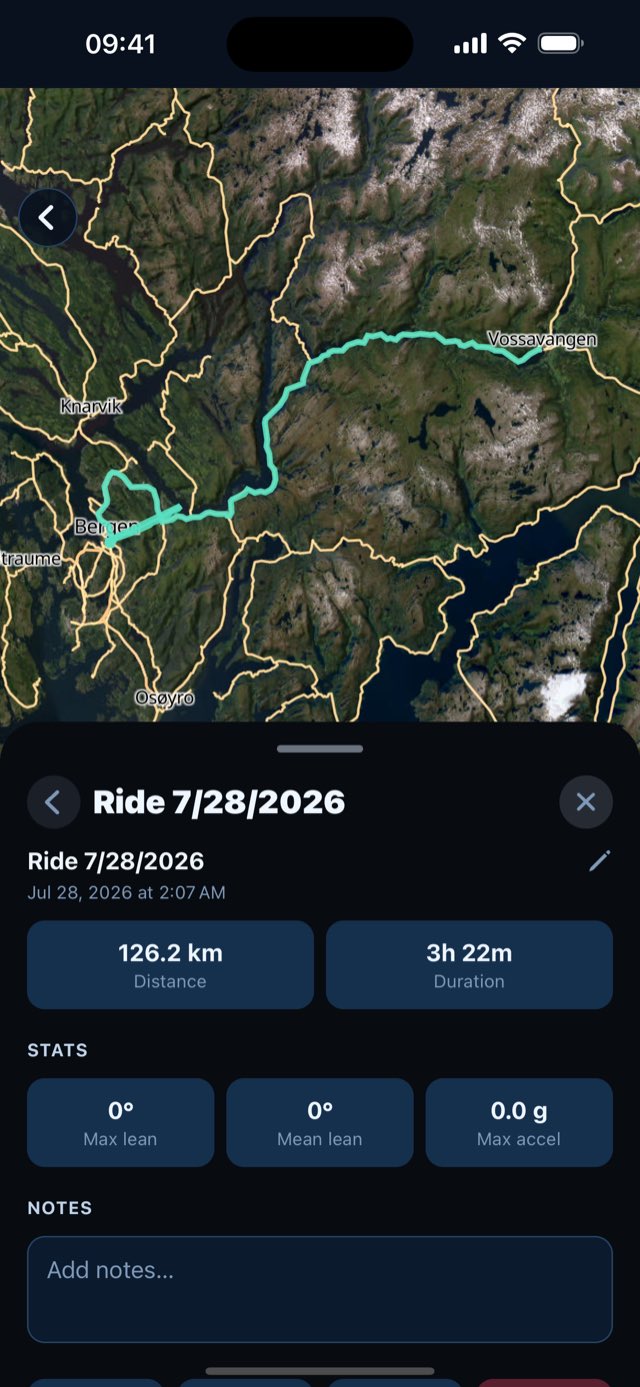
Bergen to the first dirt is 250 km of fjord road, and Epona routes it for you — that approach leg is automatic the moment you pick a trail head that isn't under your wheels. Then the tarmac ends, TET N-01 climbs onto the Hardangervidda, and the phone stops asking for signal because it never needed any.
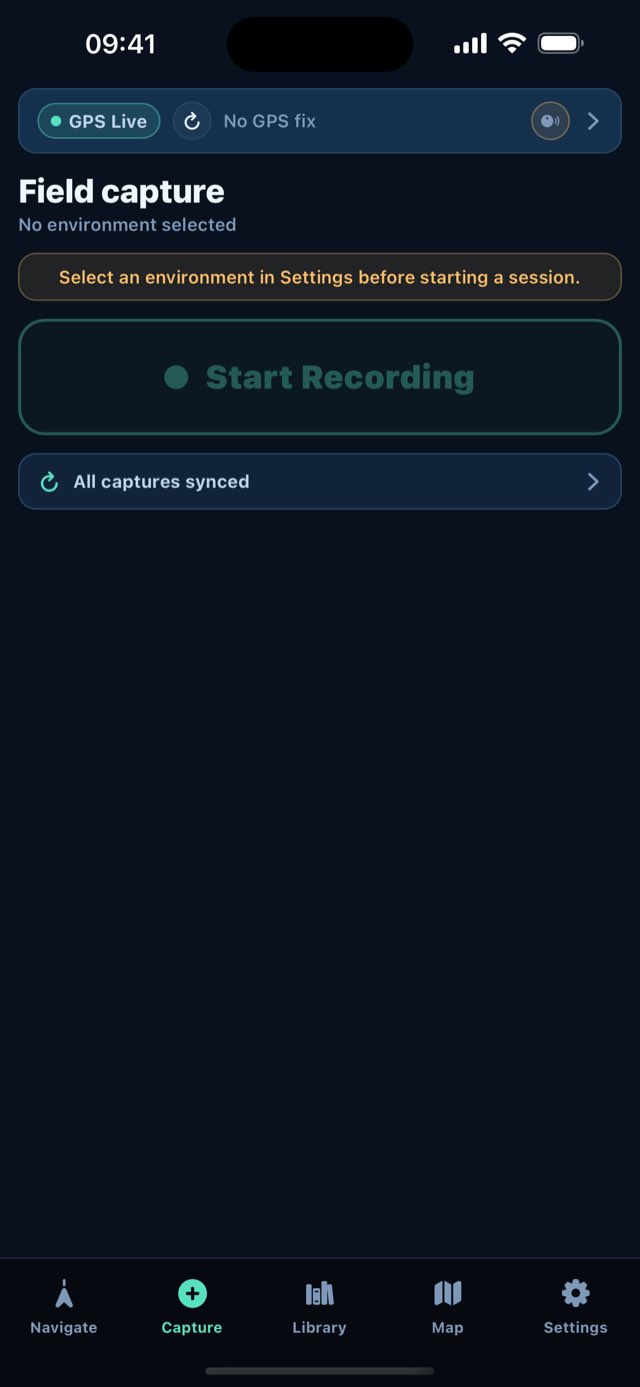
Sweden is where a nav app earns its keep or gets deleted. Three TET sections run south from the Norwegian border to Skåne, and between them Epona does the thing no one else does: it hunts for the good road instead of the quick one. Ask for a loop and it will weave a scored twisty road — or a lake worth swimming in — into it.
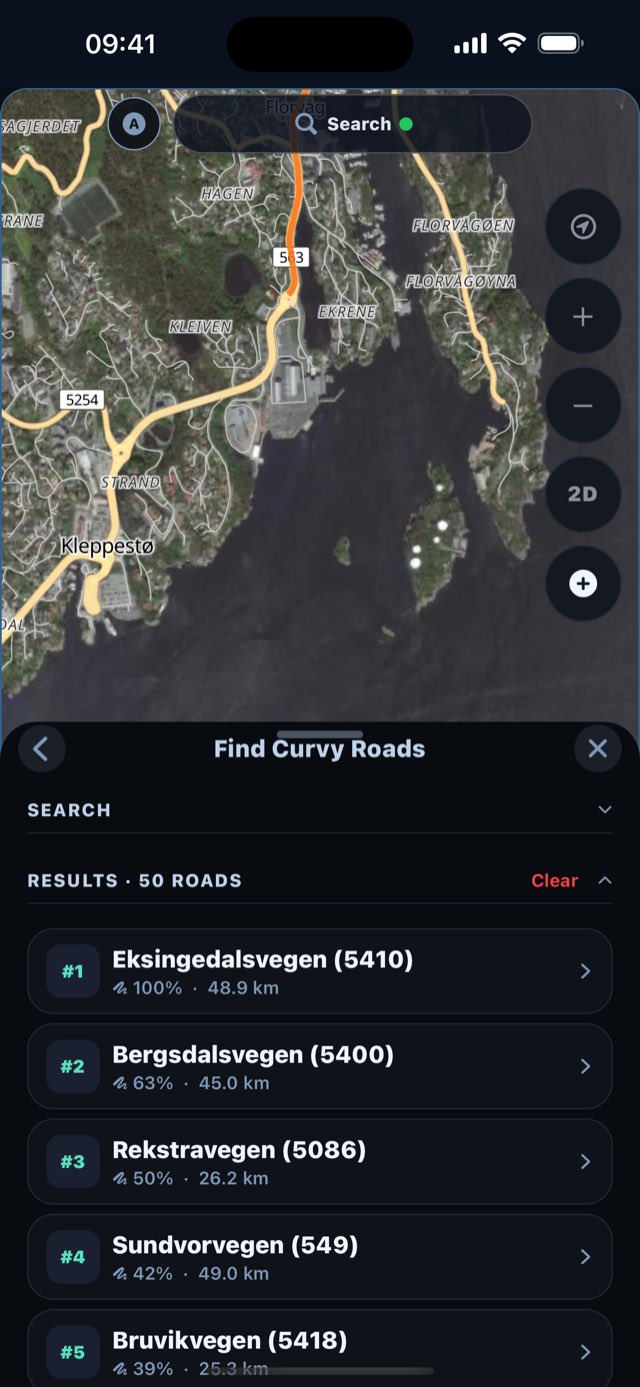
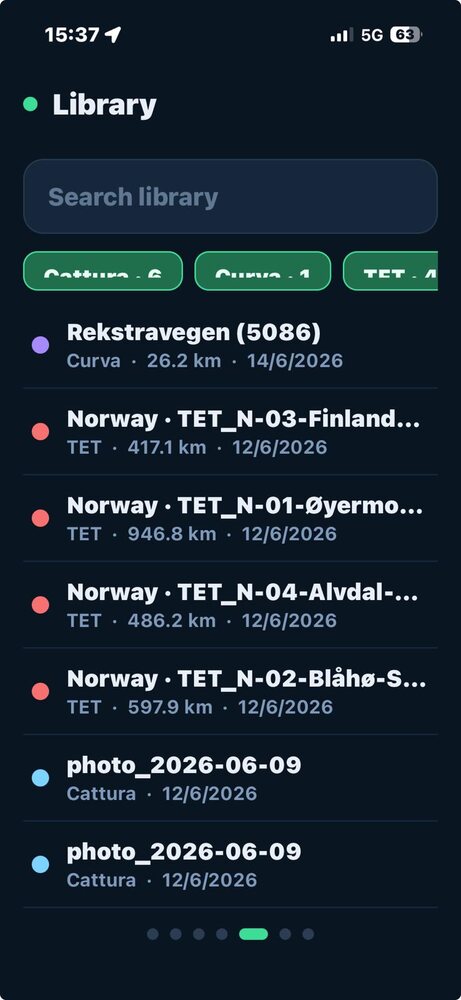
Ystad to Świnoujście is 171 km of sea. On the globe it is the dashed line — the only part of these fourteen thousand kilometres that isn't a road. Seven hours to eat, sleep, and let the ride so far catch up with you in the library: every track, every photo, every note, in one place and still yours.
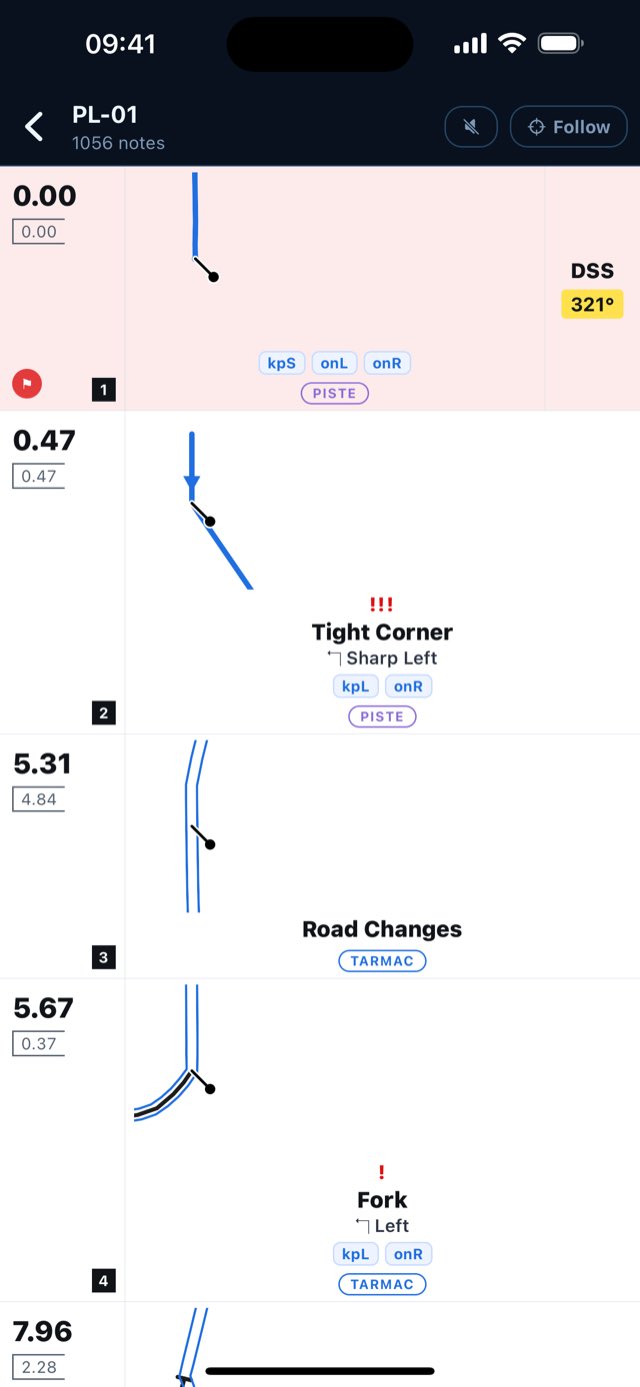
Polish TET runs 817 km from the coast down to the Sudetes, and much of it is unsigned forest track where a turn arrow means nothing. So Epona will generate a rally-style tulip roadbook for any track you have — this one, an imported GPX, a ride you recorded last year — and read the notes to you as you reach them.
No trail here — just a route: the Sudetes to Prague, down through Bohemia to Linz and Salzburg, then up the Grossglockner to the Hochtor at 2 504 m and over into Friuli. Epona checks the weather at every point along it, at the time you'll actually be there, and will find you a drier way round or tell you to leave two hours later.
The Italian Trans Euro Trail runs 3 015 km across the whole arc of the Alps, and Epona holds all of it offline — the trail, the map, the elevation, the search. This is the part of the trip where a data plan stops being a plan.
The bike is on a real routed line, on real terrain — 26 km of the Stelvio's northern ramp out of Prato allo Stelvio.
Every junction is a guess unless something knows which road is worth the fuel.
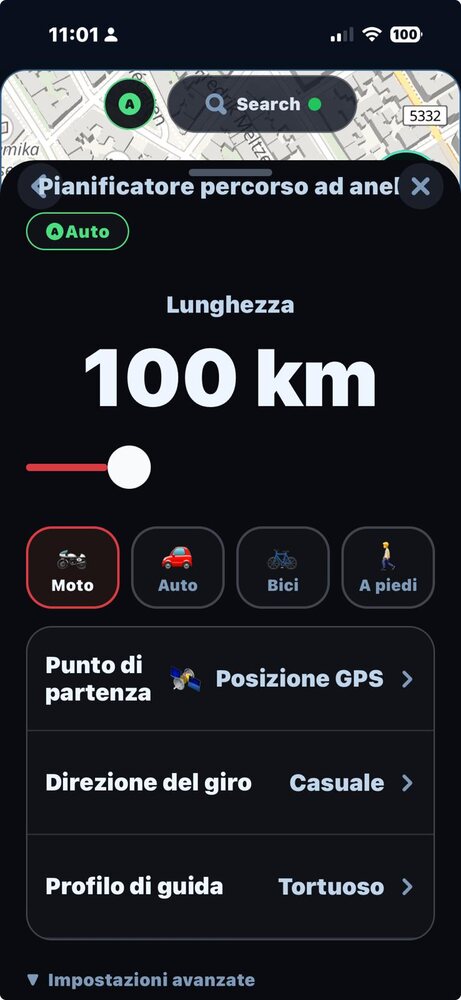
Curvature is scored from the road's own geometry, not its reputation. Search near you, sort by how twisty it actually is, and send the winner straight into the route.
46 of those 48 bends are true hairpins — counted from the shape of the road, the same way the rally roadbook finds a turn where there is no junction to name.
Pick a distance and a mood and the loop generator builds a circuit that returns where it started — 25 to 400 km, on the phone, with no signal needed. The one under the rider is a real 167 km lap of Lago Maggiore past Stresa and the gardens of Isola Bella, computed on the same engine the app carries.
The app arms itself when you enter a saved stretch, times the run and ranks it — against your own best and everyone else's — with what the sensors saw on the way.
A phone on a bar mount lives in landscape, so the whole interface is built twice. The controls move to the side away from your throttle hand, the map takes the width, and the layout even knows which way the notch is pointing — because the side the sidebar lands on changes what you can reach at speed.
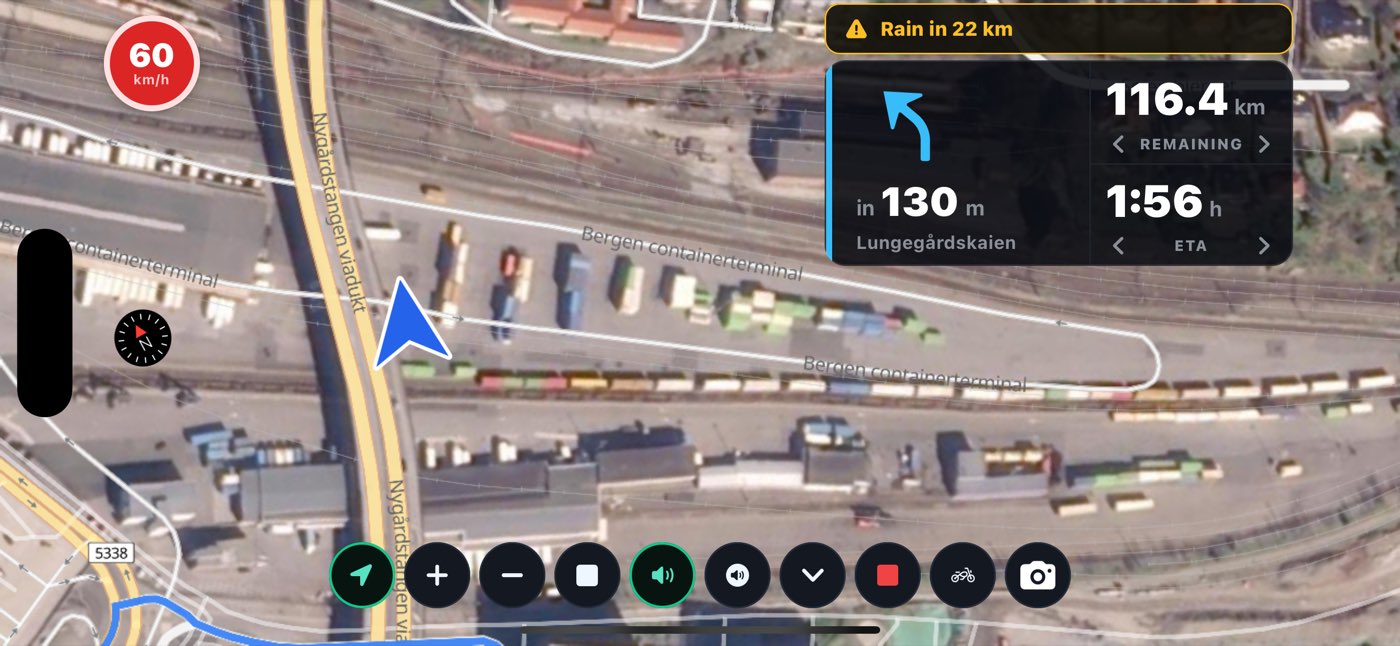
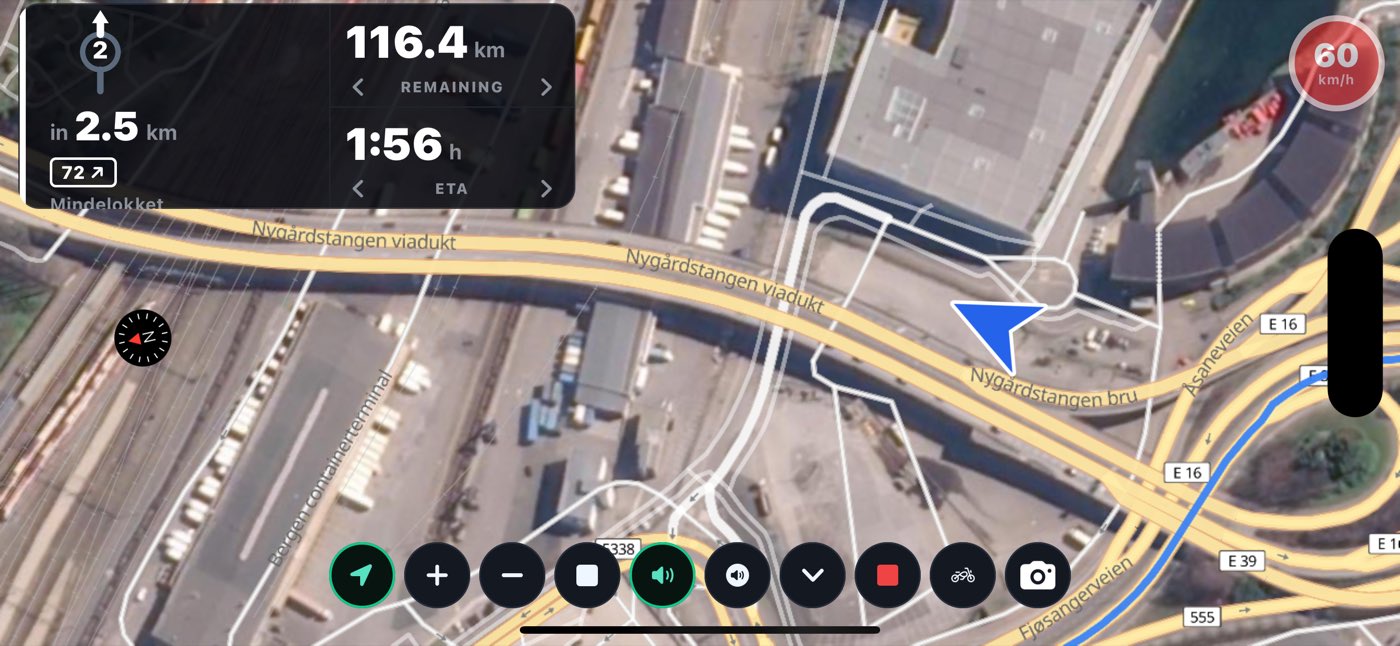
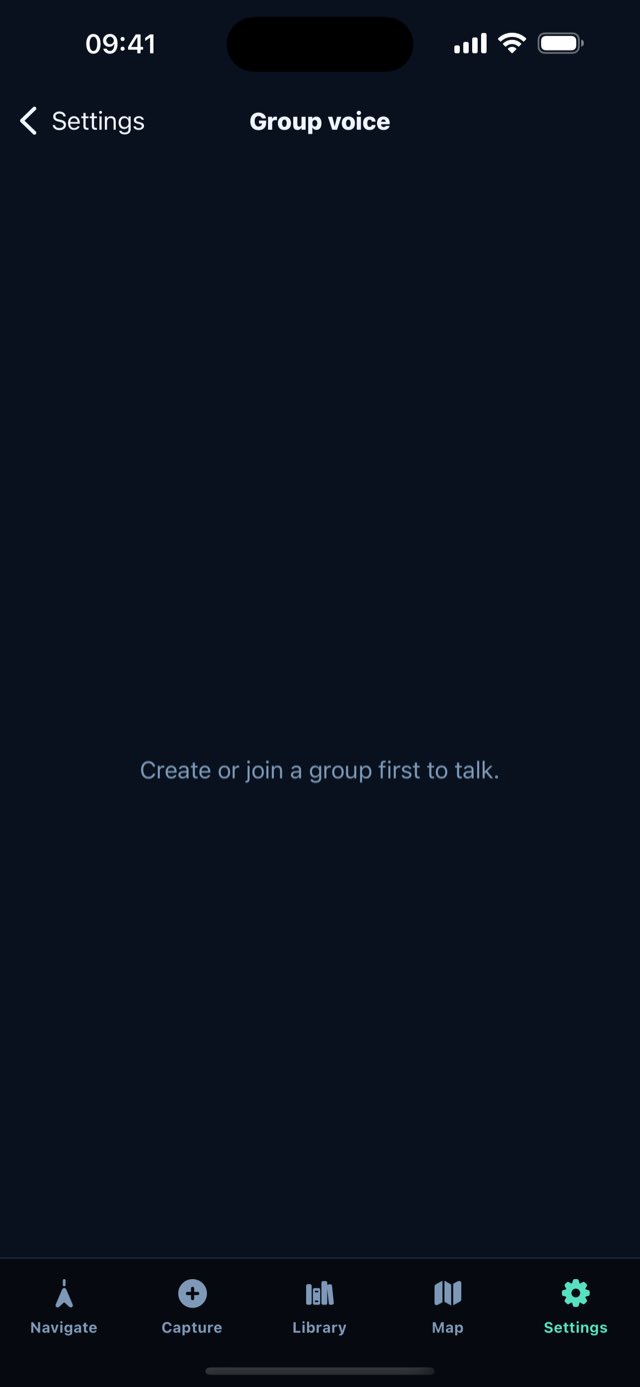
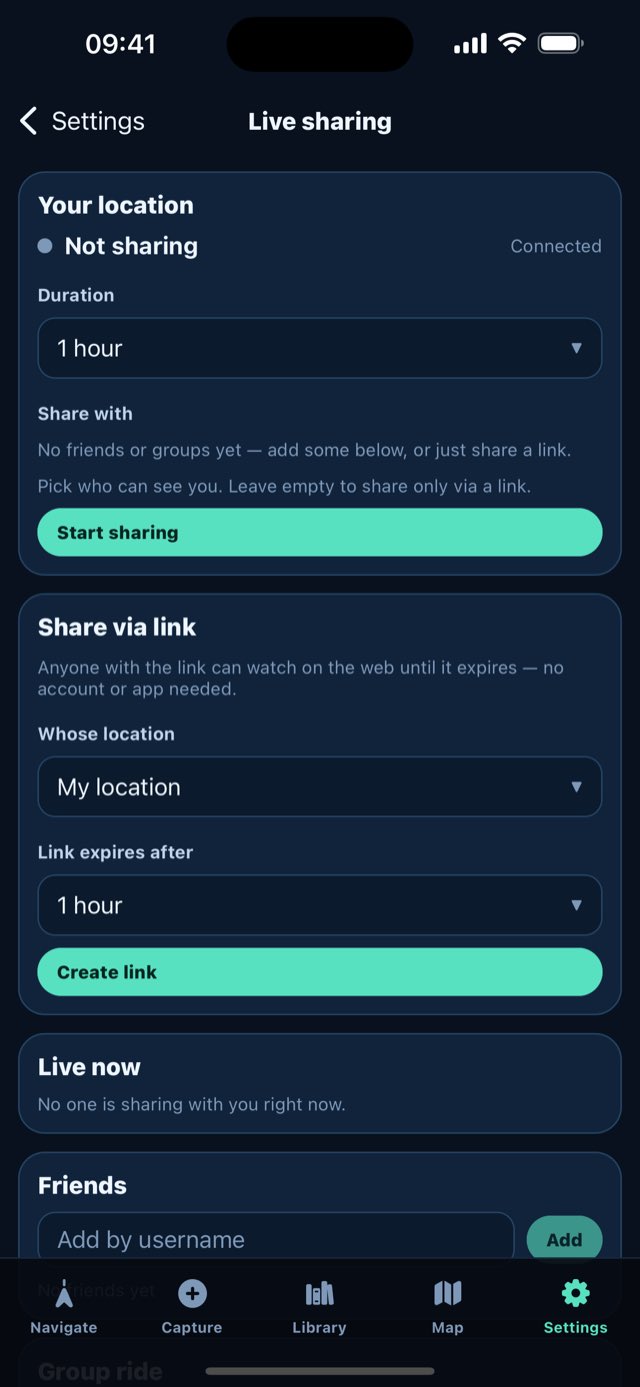
One rider shares the route and everyone navigates that exact line. If the leader reroutes, the whole convoy's route rewrites itself; if you drop back, you get sent to the nearest point ahead rather than a private detour. Press to talk without letting go of the bars, or call the group outright — the audio runs on our own server, so nobody else is listening.
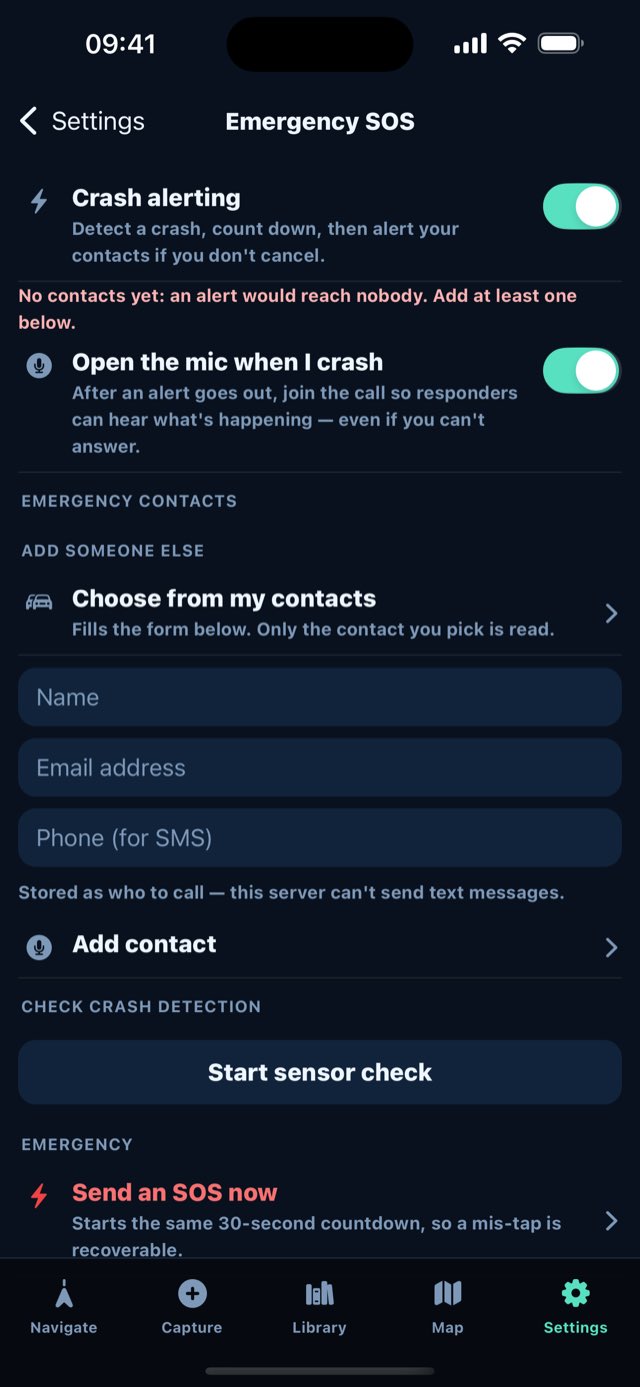
A hard impact followed by a stop starts a thirty-second countdown on the screen, and silence sends. Then, in order: the riders on your group ride, their phones ringing so your handset becomes an open microphone; your emergency contacts by push, email and text with your position; and a second, louder round five minutes later if nobody has answered. One tap acknowledges — and that reaches you too.
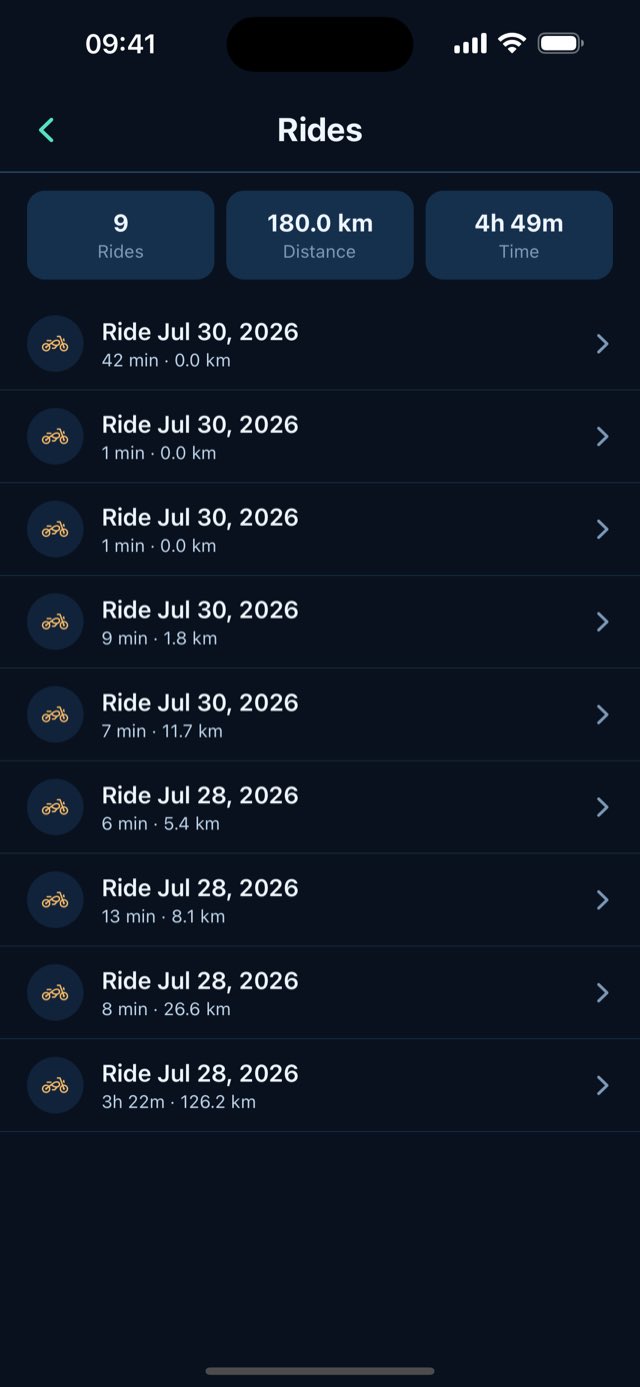
2 078 km of Spanish TET later, the trail runs out at Cabo Fisterra with the Atlantic in front of it. What you have then is the whole thing: every track, every photo, every note, every recorded ride — and one tap turns it into a narrated 3D story of the trip you just did, in whichever language you want to send it in.
Every singletrack in 33 European countries, scored for how you'd actually get there — by car, by pedal, or by lift. Ride it and the sensors do the rest: they find the descent themselves, time it, and rank it against your own bests and everyone else's.
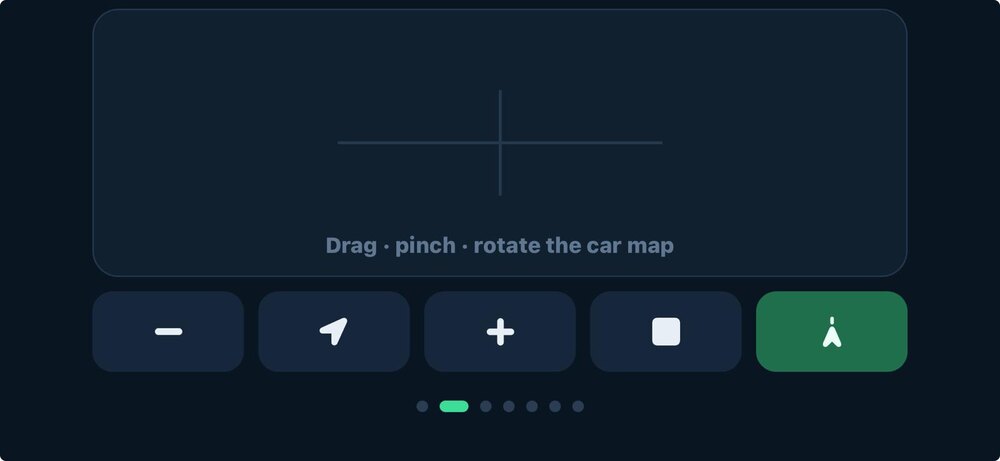
Full turn-by-turn on Apple CarPlay — mounted on the bike, eyes on the road, hands on the bars. Android Auto is in the workshop.
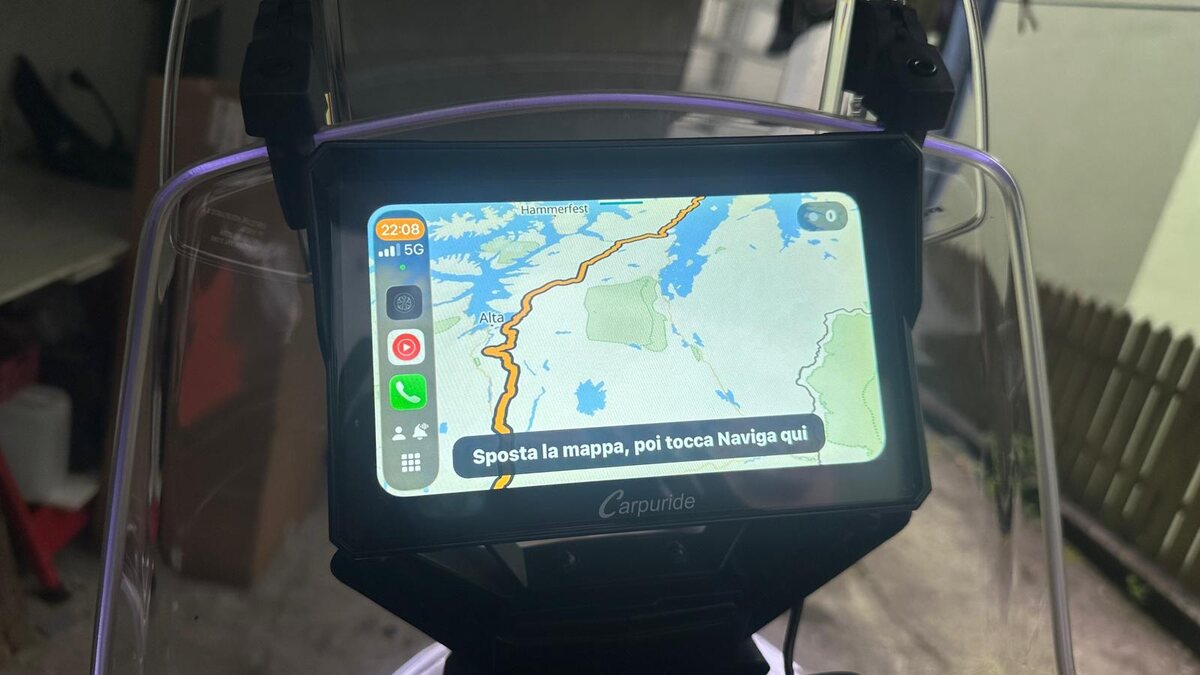
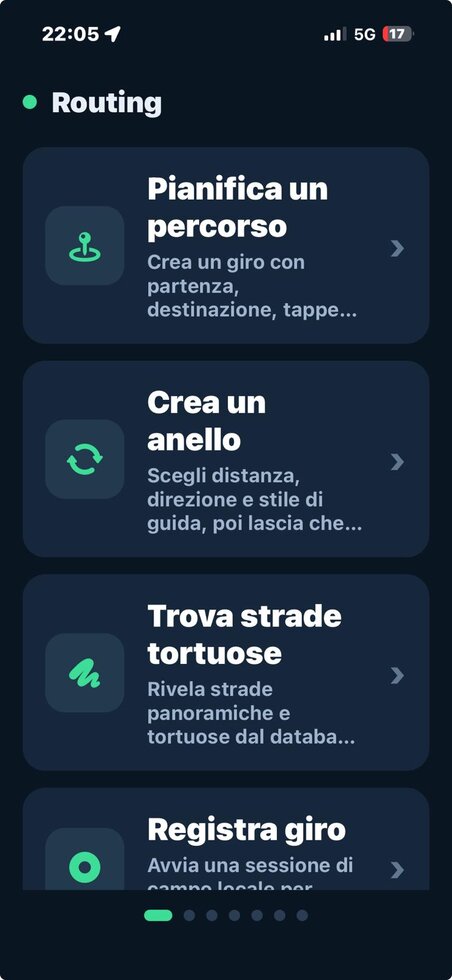
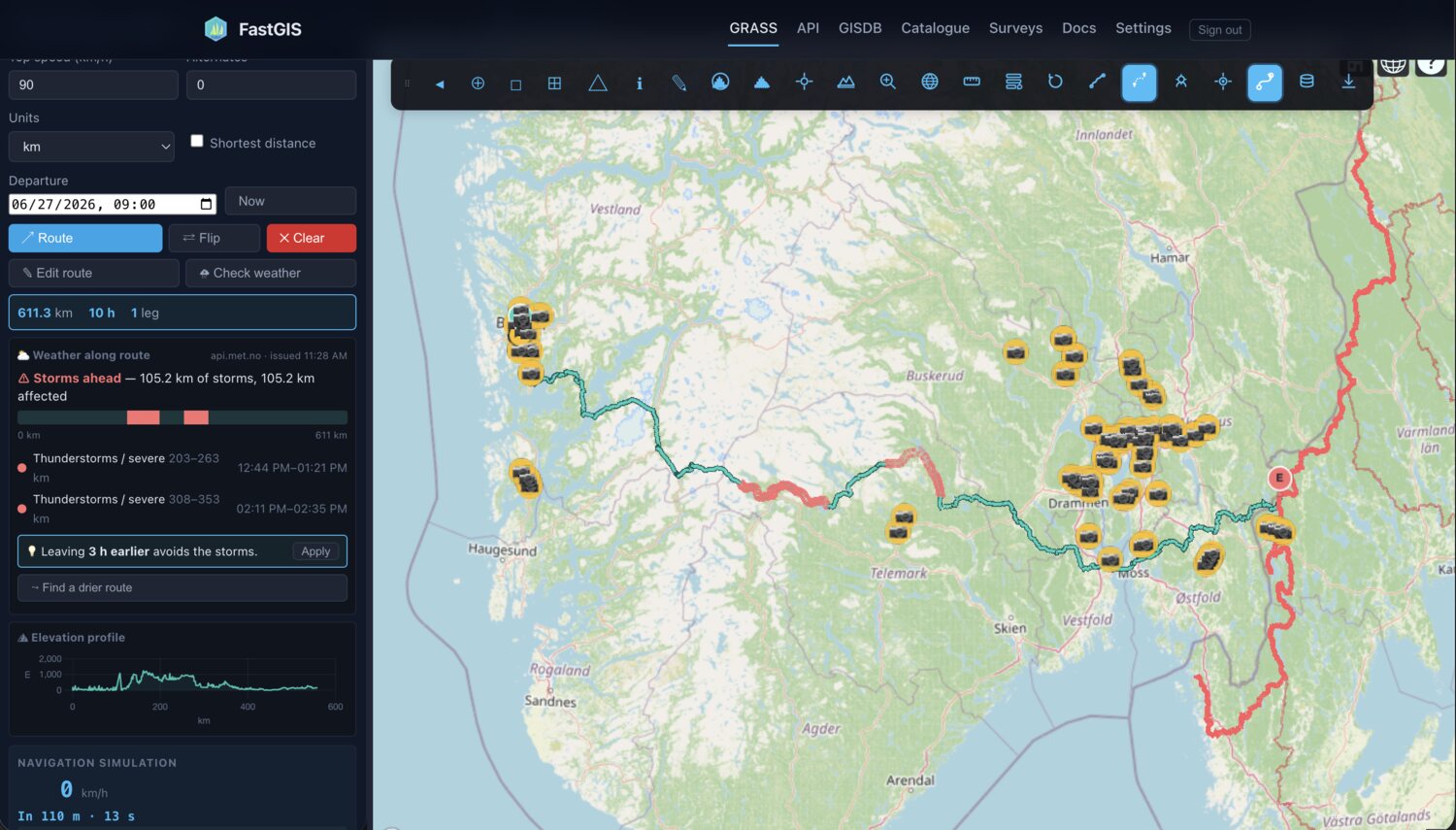
Plan on a real monitor, then ride it from your pocket — same account, same library, same routing engine. Here it has planned a 611 km run from Bergen to a Swedish TET track through our adventure-tuned Valhalla fork, then checked the forecast along it: api.met.no flags two severe-storm windows in red and suggests leaving 3 hours earlier to ride around them.
Browse & edit TET tracklines over self-hosted GLO-30 terrain.
Curvy roads, the TET, 1.27M MTB trails, beaches and outdoor spots — searchable on one map.
Bake a ride into a multilingual 3D story with AI narration.
Route, weather & 3D views are live captures from the desktop client; the discovery and story panels are shown as illustrations.
One app for the whole loop: find the line, ride it, record everything, relive it.
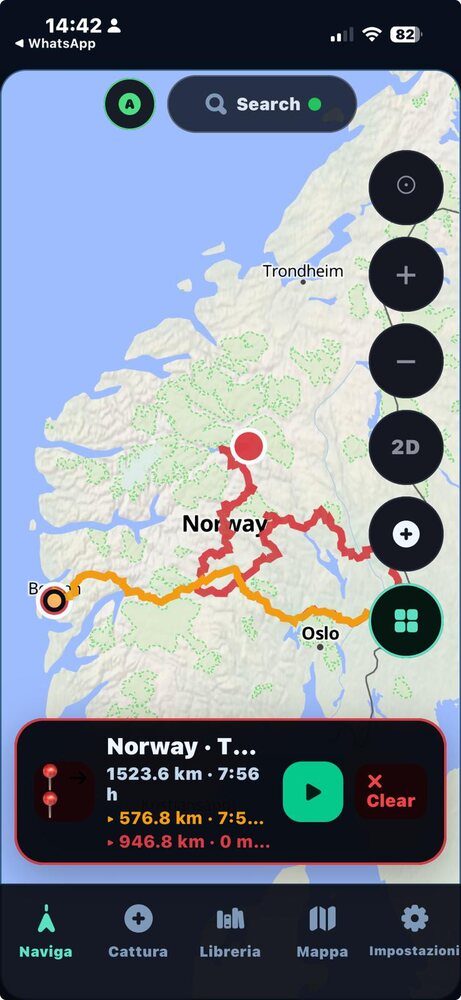
GPX in, navigate out — your routes and the TET drawn on 3D satellite maps.
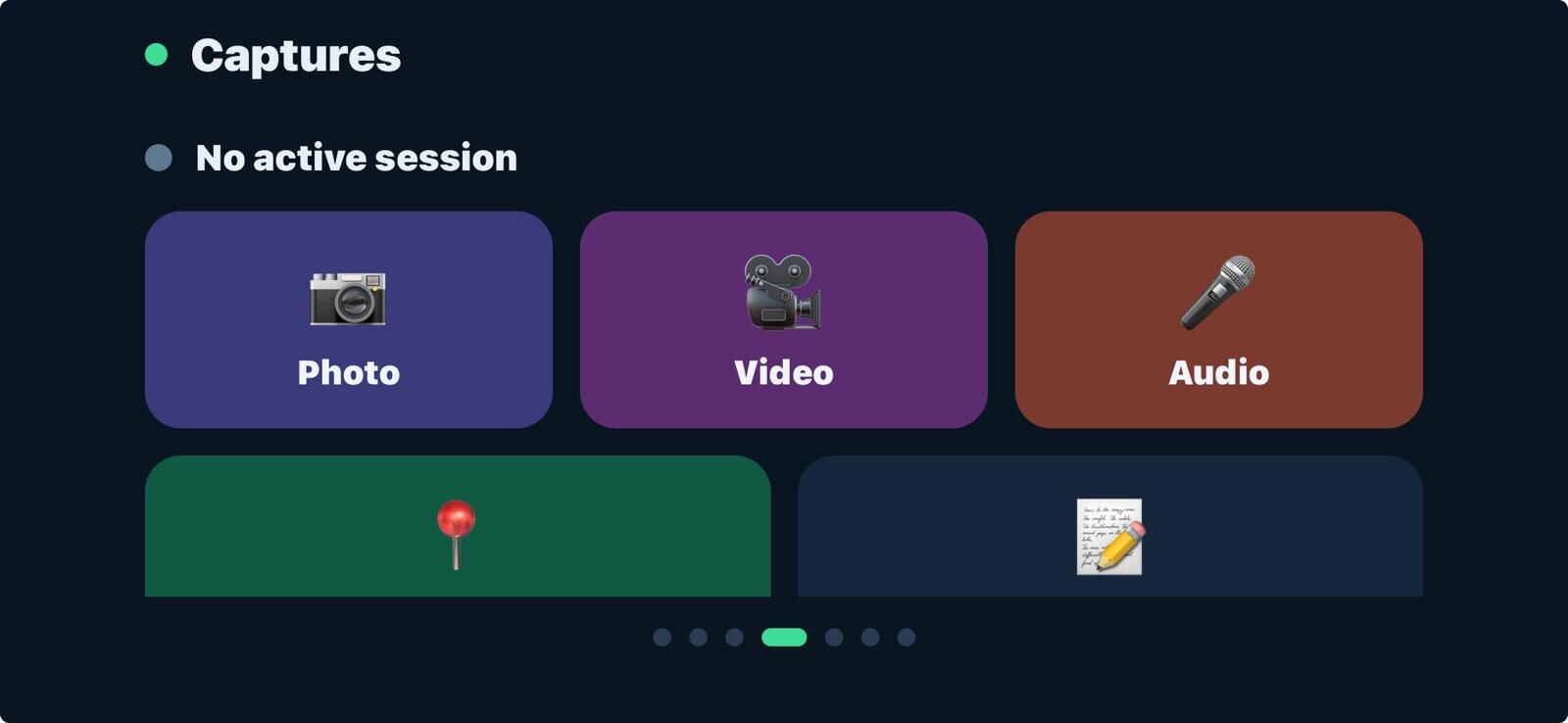
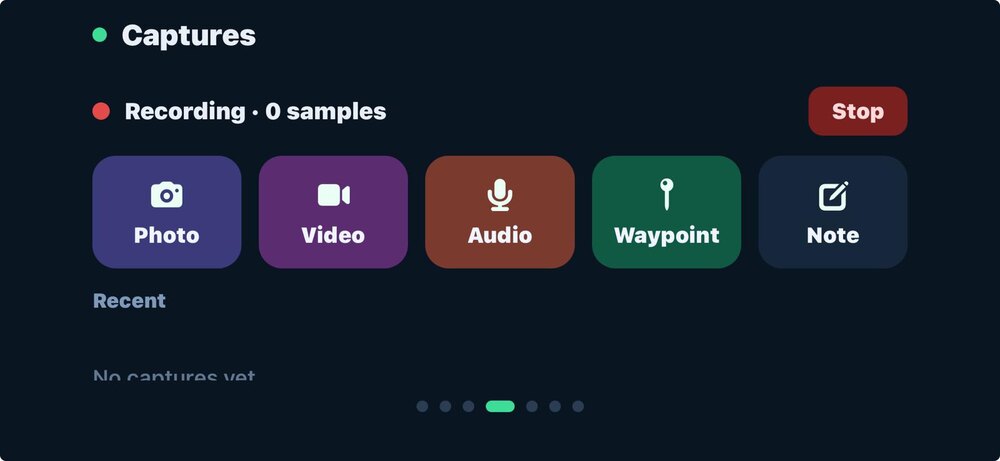
Photo, video, audio & notes — all geotagged to your track.
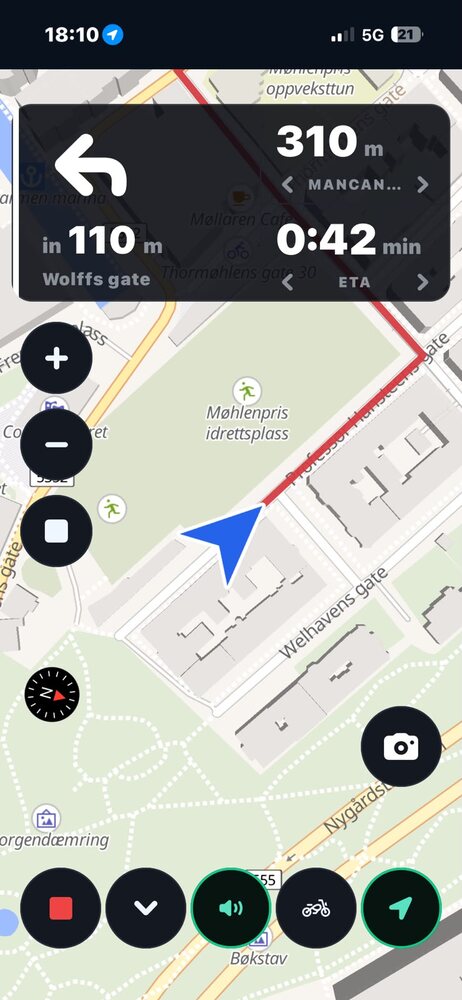
Off-route detection, smart reroute and speed-cam alerts.
Every bend as a tulip — danger calls, surface & crossings, spoken as you ride.
Pick a distance and a riding style — get a circular tour, instantly.
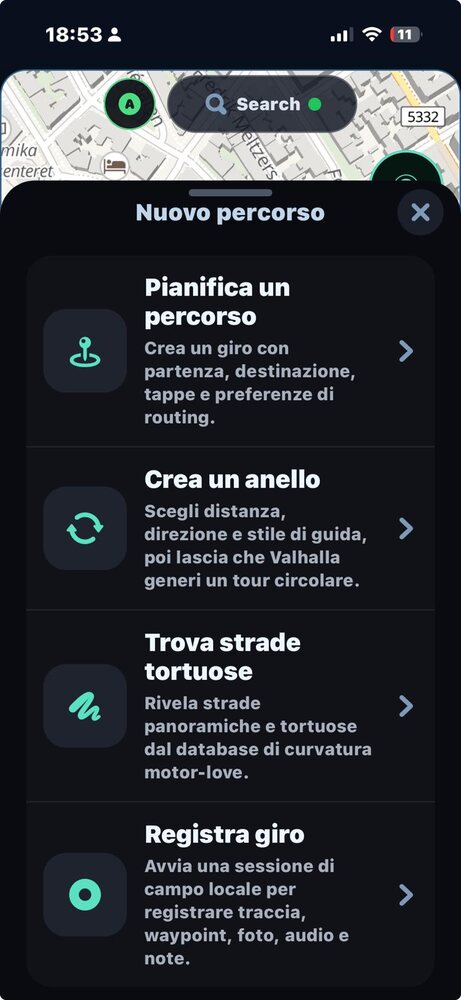
Plan, loop, round-trip, optimise, hunt curves, or record — from a single sheet.
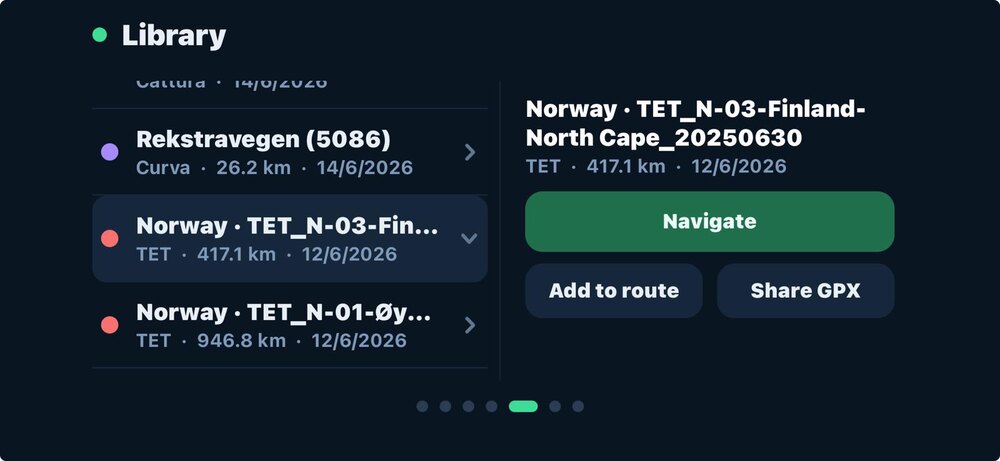
Rides, tracks, captures, MTB trails and TET — searchable on a single map.
Epona is real, installed, and being ridden — which is exactly when a test rider is worth most. Tell us how you ride and we'll send you a build. Two minutes, and everything except the email is optional.
We've sent one mail with a confirm link — click it and your invite is on the way. If it isn't there in a minute, try spam, then shout at info@fastgis.eu.
Your answers are in, completely anonymously. If you change your mind about that invite, the form is right here.